Search Website
Meet Our Faculty: Humans of Social Science | Aislinn Sandre, Assistant Professor, Department of Psychology

For Assistant Professor Aislinn Sandre, the path to psychological science began with a question about how our experiences shape us. As an undergraduate at Queen’s University, Sandre worked on an honours thesis studying bullying and helped recruit participants for an fMRI study examining whether experiences of peer victimization were related to differences in brain activity.
Seeing images of participants’ brains and thinking about how their experiences might have shaped them sparked a lasting curiosity.
“It made me realize how much we can learn about people by studying the brain and how this can help us understand mental health,” Sandre says.
That interest grew while she was working as a research assistant in an emergency department in downtown Toronto. There, she saw how many people were seeking care for mental health concerns, prompting her to think about the possibility of identifying people who may be at risk much earlier and finding ways to support them before they reach a crisis point.

Today, Sandre is a developmental and affective neuroscientist who studies how early-life experiences relate to brain and emotional development from infancy through adulthood, and how these differences may be associated with the risk of depression and anxiety.
Her goal is to better understand these pathways so that researchers can identify children who may be most in need of support and explore opportunities for earlier intervention.
You can learn more about her lab’s research here: sandrelab
Learning to Think Critically
In the classroom, Sandre hopes students leave with more than knowledge about psychological science. She wants them to develop the habit of questioning what they encounter.
Whether they are reading an academic paper, scrolling through social media, or watching a news story, she encourages students to pause and ask: How do we know this is true? What evidence supports it? What might we be missing?
“There are always limitations, alternative explanations, and new questions to consider,” she says.
For Sandre, critical thinking means learning how to evaluate evidence and consider different possibilities rather than simply accepting a claim at face value.
“I hope students leave my classes knowing how to think critically, rather than simply what to think.”
Why People Matter
Ask Sandre what makes people the most interesting subject of study, and her answer comes down to one remarkable organ:
Their brains.
“The human brain has been described as the most complex three pounds in the universe,” she says.
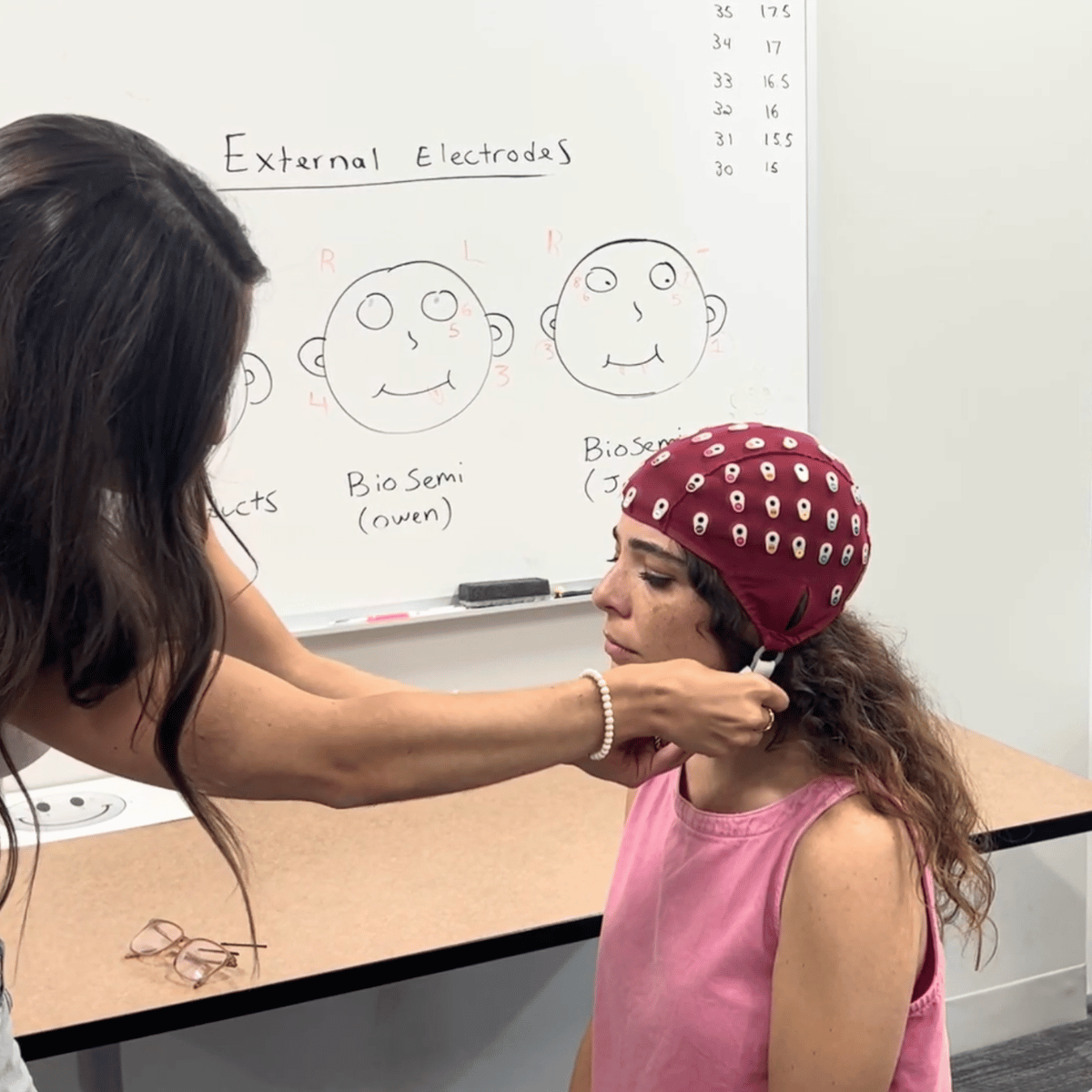 There is still so much researchers do not understand about how the brain develops, adapts to our experiences, and shapes the way we think, feel, and interact with the world.
For Sandre, that complexity is what makes studying people so fascinating.
Challenging a Common Myth
One misconception Sandre would like to correct is the idea that clinical psychologists only provide therapy.
While therapy is an important part of clinical psychology, Sandre points out that it is just one of many possible career paths within the field.
As a clinical psychologist, her own work is primarily focused on research, teaching, and mentoring students.
“I love that clinical psychology can open the door to so many different ways of working in mental health,” she says.
Moments That Stay With You
Some of the most meaningful moments in academia happen when research reminds us just how individual every person is.
Sandre recently published a paper examining how children’s brains develop during the first 18 months of life. The research found that brain development was not a steady, linear process. Instead, there were periods of faster and slower change, along with considerable variability between children.
For Sandre, the findings offered an important reminder: even when researchers identify patterns across a group, no two children are exactly the same.
Her students found their own way to celebrate the research. They surprised her by framing one of the figures from the paper and giving it to her as a gift.
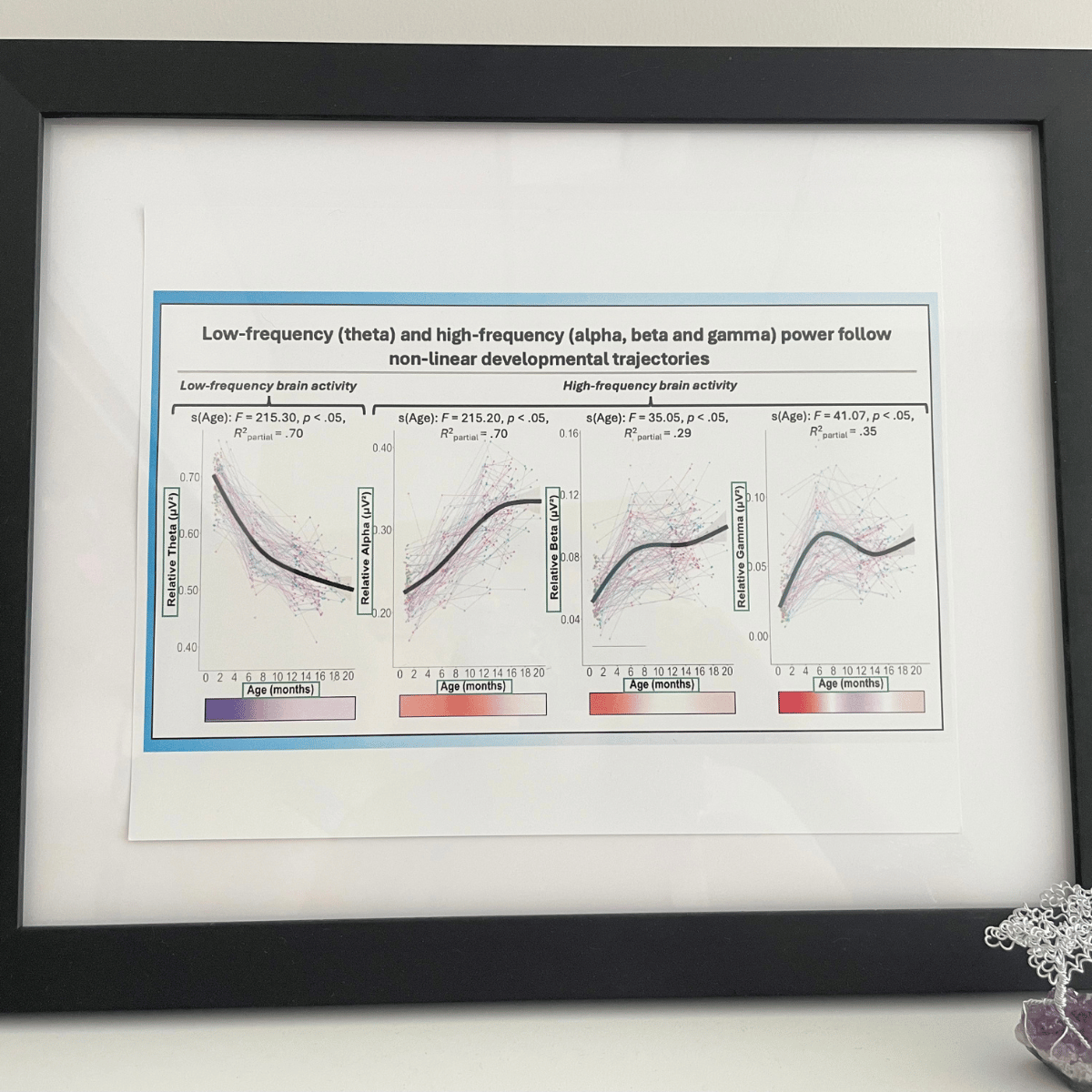
“It was one of the most thoughtful gifts I’ve received as a mentor,” Sandre says. The framed figure now sits in her office, where it serves as a reminder of both her lab’s work and the students who make that work so meaningful.
“I love looking at it because it reminds me not only of my lab’s goal to understand what drives differences in brain development, but also of how lucky I am to work with such bright and thoughtful students.”
The Human Side of Social Science
There’s a side of Sandre that students might not expect from a developmental and affective neuroscientist: she once spent an entire summer working as a mover during her undergraduate years.
At 5'3", Sandre admits she may not have been the first person people expected to see carrying couches up staircases. But she made it through the summer — and came away with a lasting respect for the people who do the job.
When it comes to books, Sandre is drawn to stories and research that challenge the way we think about the relationship between biology, our environment, and our health. Two books that have stayed with her are Missing Microbes: How the Overuse of Antibiotics Is Fueling Our Modern Plagues by Martin J. Blaser and Why Zebras Don’t Get Ulcers by Robert Sapolsky.
She enjoys books that take something we experience every day and make us see it from an entirely different perspective.
And her instant mood booster?
“Steal My Sunshine” by Len.
Social Science, in One Word
When asked to describe what Social Science means to her in one word, Sandre chooses:
Complexity.
It’s a fitting word for someone whose work explores the constantly changing relationship between our experiences, our brains, our emotions, and the world around us.
For Sandre, understanding people means embracing the fact that there is rarely a simple answer — and that there is always more to discover.
If you want to share your own story or know someone who should be featured, please reach out to us!