Search Website
Meet Our Faculty: Humans of Social Science | Jesus Chavarria, Assistant Professor, Department of Psychology
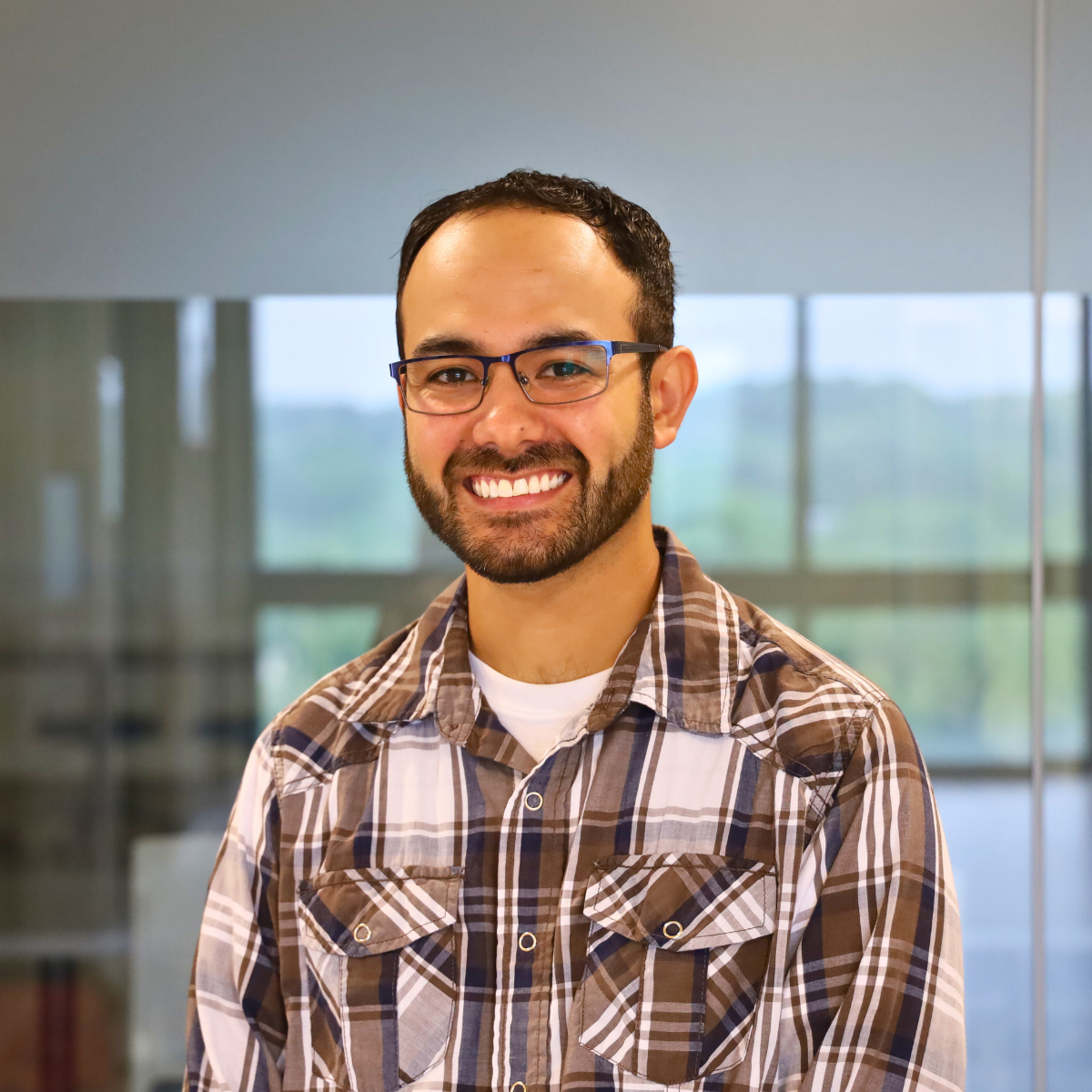 From an early point in his academic journey, Professor Jesus (Jesse) Chavarria was drawn to questions many people find uncomfortable — questions about drug use, addiction, and the profound power psychoactive substances can have over human behaviour.
What fascinated Chavarria most was the contrast. As humans, we are evolutionarily driven to care for our children and protect our families — yet substance use can override even these deeply ingrained instincts. “The power associated with those kinds of substances is fascinating,” he explains. Understanding how decisions can lead to life-altering consequences became the foundation of his path into Clinical Psychology.
While his work draws from neuroscience and pharmacology, Chavarria chose clinical psychology because it allows him to explore the human element — the psychological processes behind choices that can lead to calamitous outcomes.
Teaching Critical Thinking for Life
 In the classroom, Chavarria hopes students walk away with more than course content. His focus is on equipping them with tools they can use far beyond university.
“Scientific understanding and critical thinking are key to understanding and interacting with the world,” he says. He believes that when students learn how to evaluate evidence, ask meaningful questions, and think critically, they gain skills that apply to every area of life — not just psychology.
Why People Matter
For Chavarria, people are endlessly fascinating because of their complexity. The human brain, how it works, and how decisions are made offer limitless opportunities for discovery.
“We are complex,” he says simply. “There is never a shortage of ideas to research when it comes to our brains and how we think.” That complexity continues to drive his research and teaching every day.
Correcting a Common Myth

One of the most persistent misconceptions Chavarria encounters is the idea that dopamine is a “pleasure chemical.”
“In reality, dopamine is a motivational chemical,” he explains. “Pleasure comes primarily from other neurochemicals.” Correcting myths like this, he believes, is essential to helping students and the public better understand behaviour, addiction, and mental health.
A Moment That Stayed With Him
Some of the most meaningful experiences in academia happen quietly. One moment that has stayed with Chavarria was the first time he truly motivated a student to pursue a scientific career and research.
Seeing that spark — and knowing he helped shape someone’s future in science — remains one of the most rewarding aspects of his role as a professor.
The Human Side of Psychology

Outside of research and teaching, Chavarria is a devoted sports fan with unwavering loyalty to Chicago teams — with one exception: the White Sox.
A book that deeply influenced his perspective is High Price by Carl Hart, which challenged common narratives around drugs and addiction.
When it comes to music, he gravitates toward the classics. Songs by Queen, The Beatles, and The Rolling Stones are guaranteed to lift his mood.
Social Science, in One Word
When asked to describe what Social Science means to him in a single word, Chavarria chooses: Livelihood.
It’s a reflection of how deeply his work is tied to understanding people, improving lives, and engaging with the real-world challenges that shape human behaviour.
If you want to share your own story or know someone who should be featured, please reach out to us!