Search Website
Meet Our Faculty: Humans of Social Science | Samantha Hancock, Assistant Professor, DAN Management & Organizational Studies
 For Assistant Professor Samantha Hancock, work is not just something people do — it’s a major part of their lives. That simple but powerful realization sparked her interest in Social Science and continues to guide her research and teaching today.
“We spend so much of our lives at work,” Hancock explains. “I wanted to learn more about why we do what we do at work and how to make that experience better for people.” That focus on human experience sits at the heart of her work in organizational behaviour and human resource management.
Helping Students Navigate the World of Work
In the classroom, Hancock aims to equip students with tools they can use long after graduation. She hopes students leave her courses with a clearer understanding of how to find meaningful answers to questions about workplace behaviour and how to advocate for themselves and others.
“I want students to feel confident navigating work environments,” she says, “and to know how to speak up when something doesn’t feel right.” Whether it’s understanding policies, interpersonal dynamics, or organizational systems, her teaching encourages students to think critically and act thoughtfully.
Why People Matter at Work
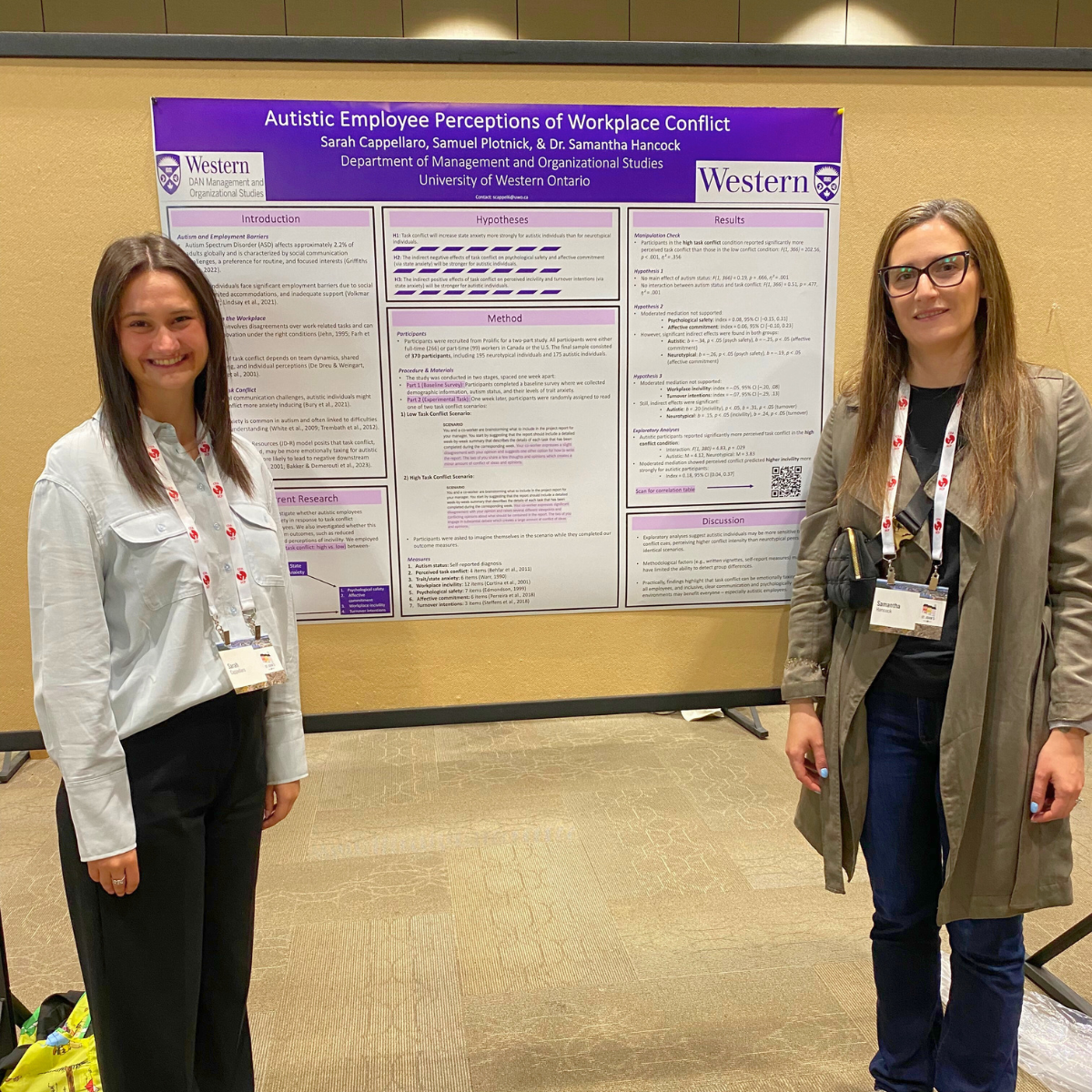 What makes people the most interesting subject of study, Hancock says, is their complexity. Human behaviour at work cannot be explained by a single cause or theory.
“People are complex, and our behaviour often can’t be explained by one clear mechanism,” she explains. “Getting to investigate why people do what they do is never a dull moment.” That complexity is what makes the study of work both challenging and deeply rewarding.
Challenging the “Common Sense” Myth
One of the biggest misconceptions about organizational behaviour and human resource management is that much of the field is simply “common sense.”
“When we apply theories to explain behaviour, it can seem like common sense after the fact,” Hancock notes. “But in reality, there are so many moving pieces that come together to explain why we do what we do.”
She emphasizes the importance of expertise in understanding workplace behaviour, noting that evidence-based research helps improve systems and processes so people can focus on what they do best.
Moments That Stay With You
 Some of Hancock’s most meaningful teaching moments come when students connect classroom discussions to real-life workplace experiences.
She recalls students sharing stories about situations at work where they recognized unfair policies affecting underrepresented groups or identified hiring practices that were not aligned with evidence-based methods. Knowing that students felt empowered to speak up because of what they learned in class stands out as especially rewarding.
“Those moments are always a nice reminder of why this work matters,” she reflects.
The Human Side of Social Science
 Outside the classroom, Hancock has a lifelong passion that surprises many students — she has been a ballet dancer since childhood. While she now dances purely for fun and exercise, it remains an important part of her life.
A book series that shaped her perspective is The Throne of Glass by Sarah J. Maas, and when she needs an instant mood boost, she turns to Bejeweled by Taylor Swift.
Social Science, in One Word
 When asked to describe Social Science in a single word, Hancock chooses: Important.
It’s a reflection of her belief that understanding people at work isn’t just interesting — it’s essential.
If you want to share your own story or know someone who should be featured, please reach out to us!