Search Website
Meet Our Students: Celebrating Success Stories | Toni Gunton
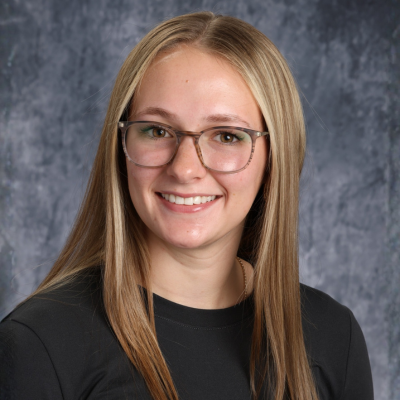 In our Meet Our Students: Celebrating Success Stories series, we highlight the journeys of students whose academic paths reflect curiosity, dedication, and a commitment to making meaningful impact. This edition features Toni Gunton, a Bachelor of Arts student in Criminology (3-year program) at Western University, whose passion for justice and equity has shaped a remarkable undergraduate experience.
Gunton’s interest in criminology began long before university, rooted in a desire to better understand the justice system and the social forces that influence it. “In high school, I developed a strong interest in justice and the law,” she explains. “I wanted to better understand inequality, crime, and the factors that shape our justice system.” That curiosity became the foundation for her academic journey, where she explored theories, case studies, and research that helped her understand not only how the justice system operates, but how it can evolve.
Throughout her studies, Gunton has found the Criminology program to be both intellectually challenging and deeply rewarding. “Through my criminology studies, I explored theories, case studies, and research that helped me understand why the justice system operates the way it does and how meaningful change can be achieved,” she says. The program’s emphasis on critical thinking and real-world application has allowed her to move beyond memorization and develop a deeper analytical perspective on complex social issues.
Her time in the Faculty of Social Science has also equipped her with essential academic and professional skills. “The Faculty of Social Science helped me develop critical reading, writing, time management, and analytical thinking skills that will serve me well in law school and beyond,” Gunton notes. One of the most valuable lessons she carries forward is learning “how to understand and evaluate complex ideas rather than simply memorize information.”
Support from academic advising played a key role in shaping her academic pathway. During her third year, Gunton faced an important decision about whether to complete a three-year or four-year degree. “My advisor carefully reviewed my academic plan, answered countless questions, and provided detailed guidance throughout the entire process,” she shares. “Their support helped me make an informed decision with confidence.” This guidance helped her move forward with clarity and confidence in her academic direction.
Between her first and second year, Gunton also participated in the Social Science Co-op Program, an experience that allowed her to bridge academic learning with practical workplace experience. “The program allowed me to receive academic credit for a position I had already been working in while continuing to gain professional experience,” she explains. “It was a great opportunity to connect classroom learning with real-world workplace skills.”
Beyond structured learning experiences, Gunton has also benefited from a strong network of mentorship within the Faculty. “Throughout my degree, professors were always approachable and willing to help,” she says. “Whether I had a quick question over email or needed clarification during office hours, they took the time to provide thoughtful guidance.” These interactions contributed to a supportive academic environment where students are encouraged to ask questions and engage deeply with course material.
The sense of community within the Faculty of Social Science has also been an important part of her experience. Gunton describes an environment where collaboration and peer support are part of everyday student life. Students regularly connect through coursework, discussions, and shared academic goals, creating a welcoming and engaged learning community.
Her leadership experiences further enriched her time at Western. In her third year, Gunton served as AVP Internal on the Western Social Science Student Council. “Although participating in such a large student organization was initially intimidating, it gave me the opportunity to connect with students, listen to their concerns, and contribute to initiatives that strengthened the Social Science community,” she reflects. She also served as the Wellness Equity Outreach Director for the University Students’ Council, where she supported initiatives focused on accessibility and inclusion, including contributions to the Transitions Video Program that helps incoming students learn about academic accommodations and support services through Accessible Education.
As a first-generation university student, Gunton’s journey also reflects personal growth and resilience. “Entering post-secondary education without a roadmap was both challenging and rewarding,” she shares. “The Faculty of Social Science provided the support and opportunities I needed to build confidence in my abilities and develop effective study habits.”
For students considering the Faculty of Social Science, Gunton offers thoughtful advice drawn from her own experience: “Don’t be afraid to ask for help. The transition to university can feel overwhelming, especially in first year, but there are many resources and people ready to support you. Take advantage of office hours, academic advising, and student services. Even in large classes, your professors genuinely want to see you succeed, and reaching out for support can make a huge difference.”
Her undergraduate journey has already led to significant milestones. “My biggest achievement was being accepted to Western Law as a third-year undergraduate applicant,” Gunton says. “Attending Western Law had been a long-term goal, so being able to complete my undergraduate degree in three years and begin law school early was incredibly rewarding.” She was also honoured to receive the Gold Medal Award for achieving the highest average among graduating students in the 3-Year BA Major program, marking a meaningful conclusion to her time in the Faculty.
Toni Gunton’s story reflects the strength of curiosity, dedication, and community within the Faculty of Social Science. Her journey highlights how academic exploration, mentorship, and experiential learning can come together to prepare students for the next stage of their academic and professional paths.
Stay tuned for more inspiring stories in our Meet Our Students: Celebrating Success Stories series as we continue to highlight the accomplishments of Western students making their mark in their fields and beyond.