

Search Website
High School History Day 2025: Delete Search History?
 Pictures by Christopher Kindratsky, Western Communications
Nov 10, 2025
By Diana Corredor
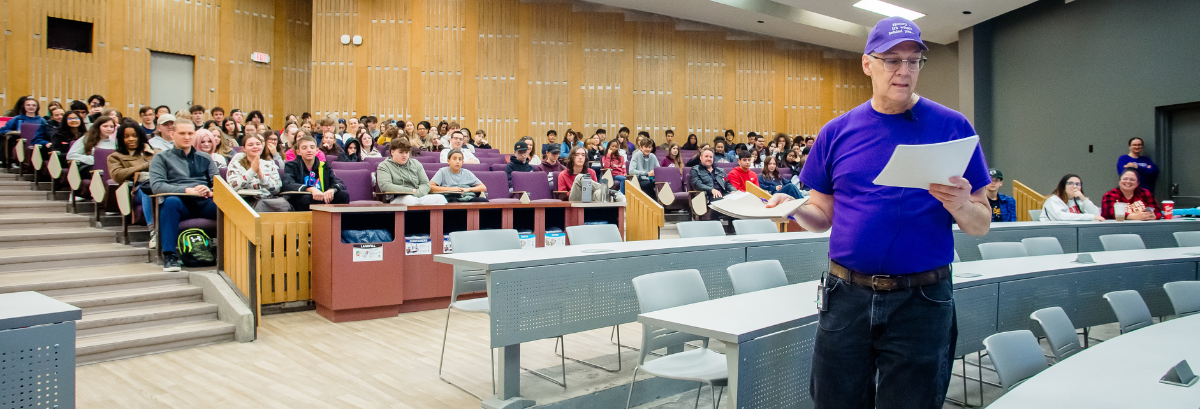
More than 300 high school students from across Southwestern Ontario filled the Social Science Centre at Western University on Thursday, November 6, 2025, for High School History Day—a day that proved history is very much alive, relevant, and worth defending.
The day began at 10 a.m. with a lively welcome from Professor Jonathan Vance in SSC 2050. Known for his storytelling flair, Professor Vance opened the event with humour and warmth, reading aloud comments students had submitted on their registration forms. Between laughter, giveaways that included T-shirts, ghost outfits, and gift bags, and plenty of interaction, he created an atmosphere that blended fun with curiosity. It was a perfect opening for what would become an inspiring day of learning and discovery.
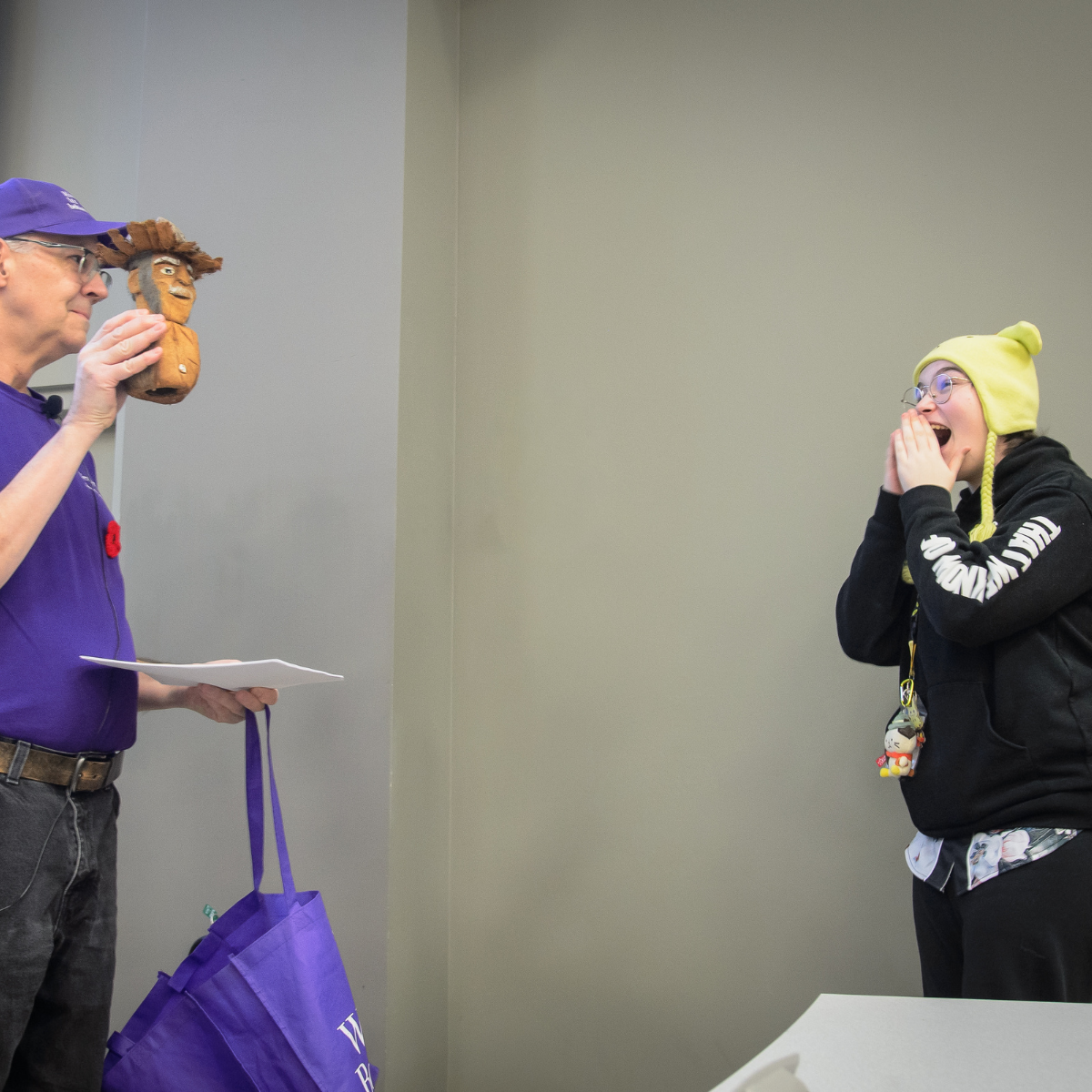 Students from schools including John Paul II Catholic Secondary School, Regina Mundi College, Arthur Voaden Secondary School, College Avenue Secondary School, London Central Secondary School, Saunders Secondary School, Sir Frederick Banting Secondary School, St. Patrick’s Catholic High School, St. Thomas Community Christian School, and several local homeschool groups attended the event. After the morning session, they broke into a series of lectures and tutorials led by professors and instructors from the Department of History. Each explored different aspects of the discipline, inviting students to think critically about how history is told, who tells it, and why it matters.
 The day’s theme, Delete Search History?, reflected an ongoing challenge for the discipline. As Professor Vance reminded students, history in 2025 finds itself under pressure from all directions—from politicians who seek to rewrite it, from influencers who distort it, from advertisers who profit from it, and from budget-cutters who threaten to eliminate it altogether. The conversations that followed throughout the day showed just how deeply students care about these questions.
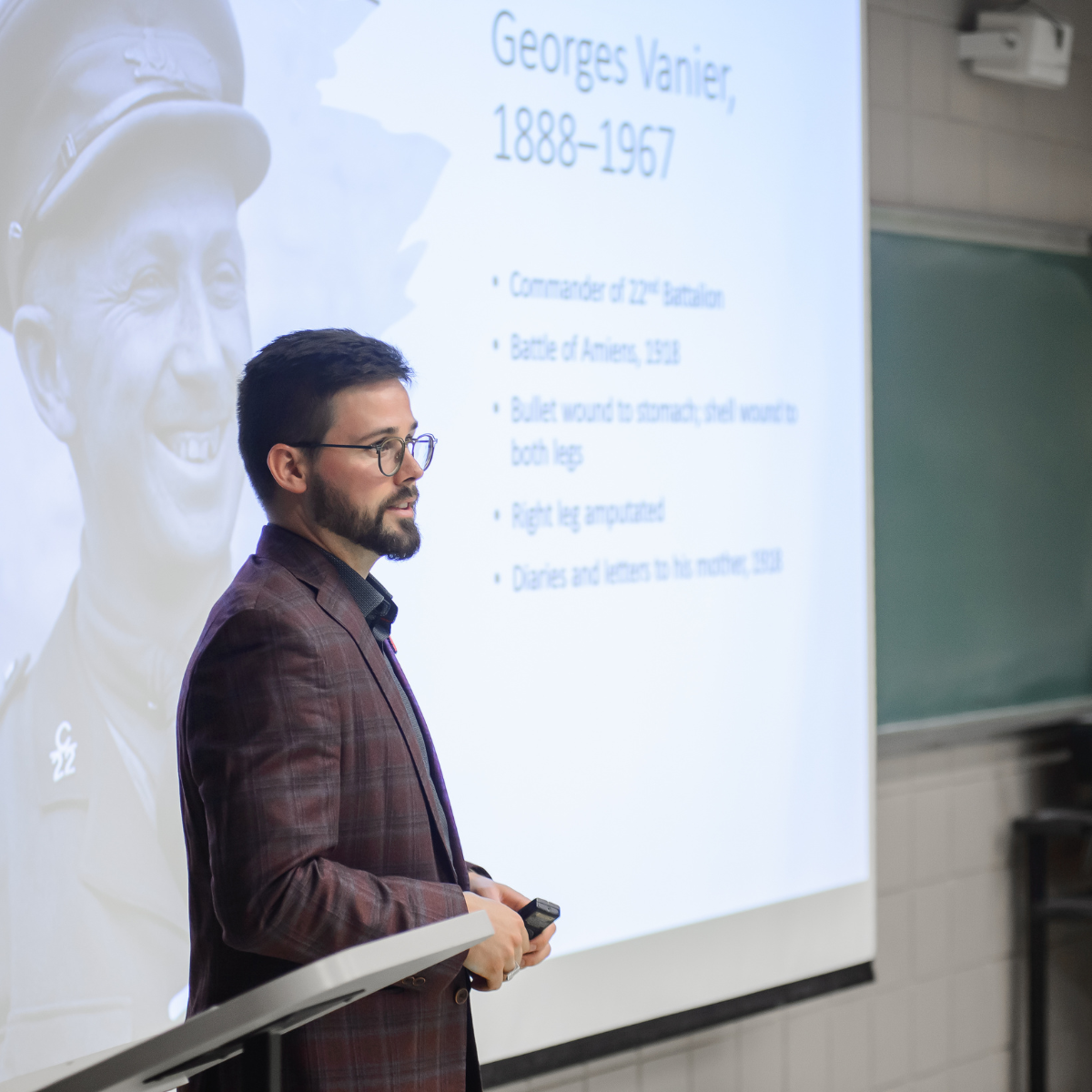
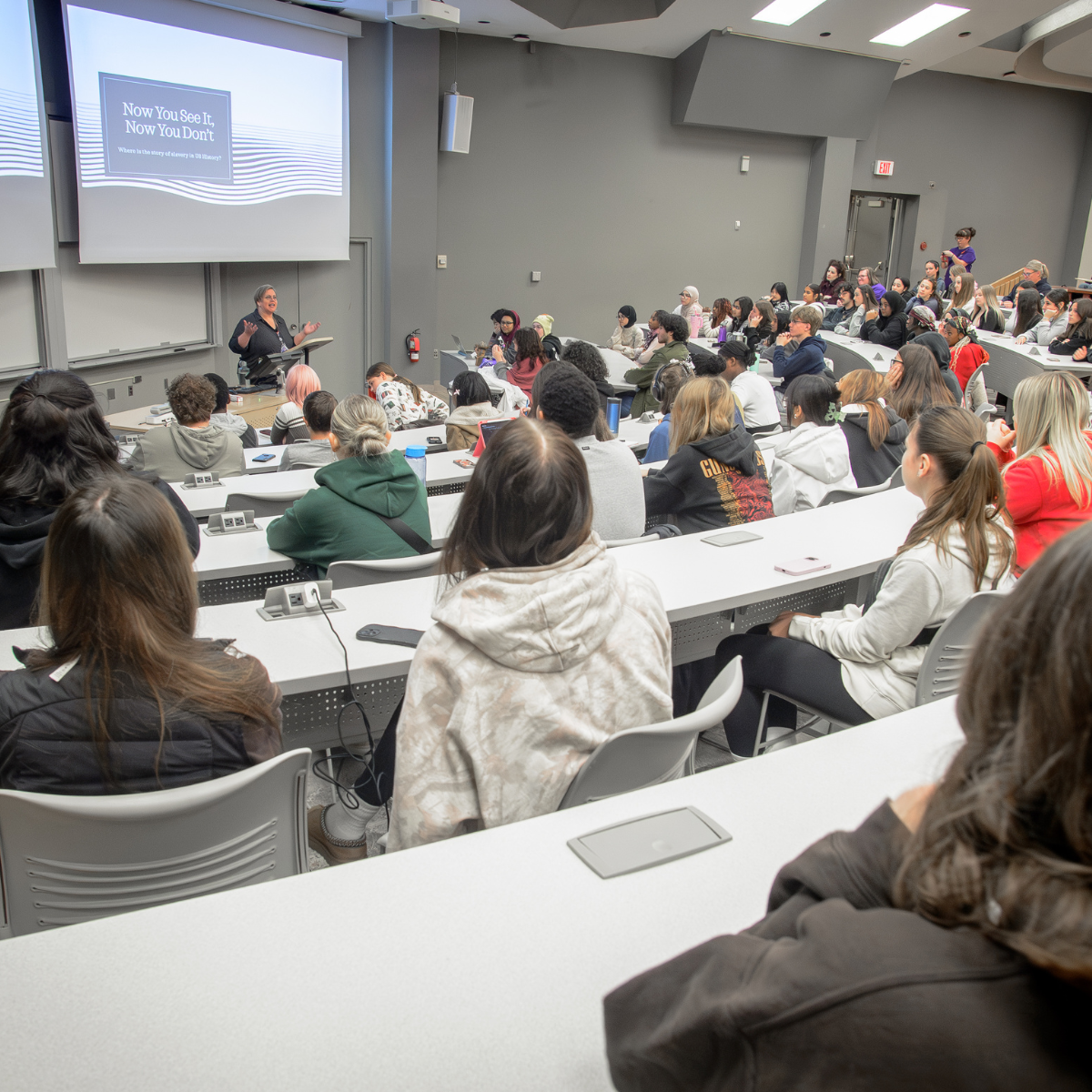 Professor Laurel Shire’s session, Now You See It, Now You Don’t: Where is the Story of Slavery in U.S. Public History?, drew more than 120 students eager to discuss how the history of slavery is being pushed out of museums and classrooms, and what that means for the future of American society. Dr. Eric Story guided another large group through Beyond Flanders Fields: Finding Veterans after the Great War, an emotional look at how soldiers returning from the First World War struggled to find their place in societies that had promised them a “land fit for heroes.”
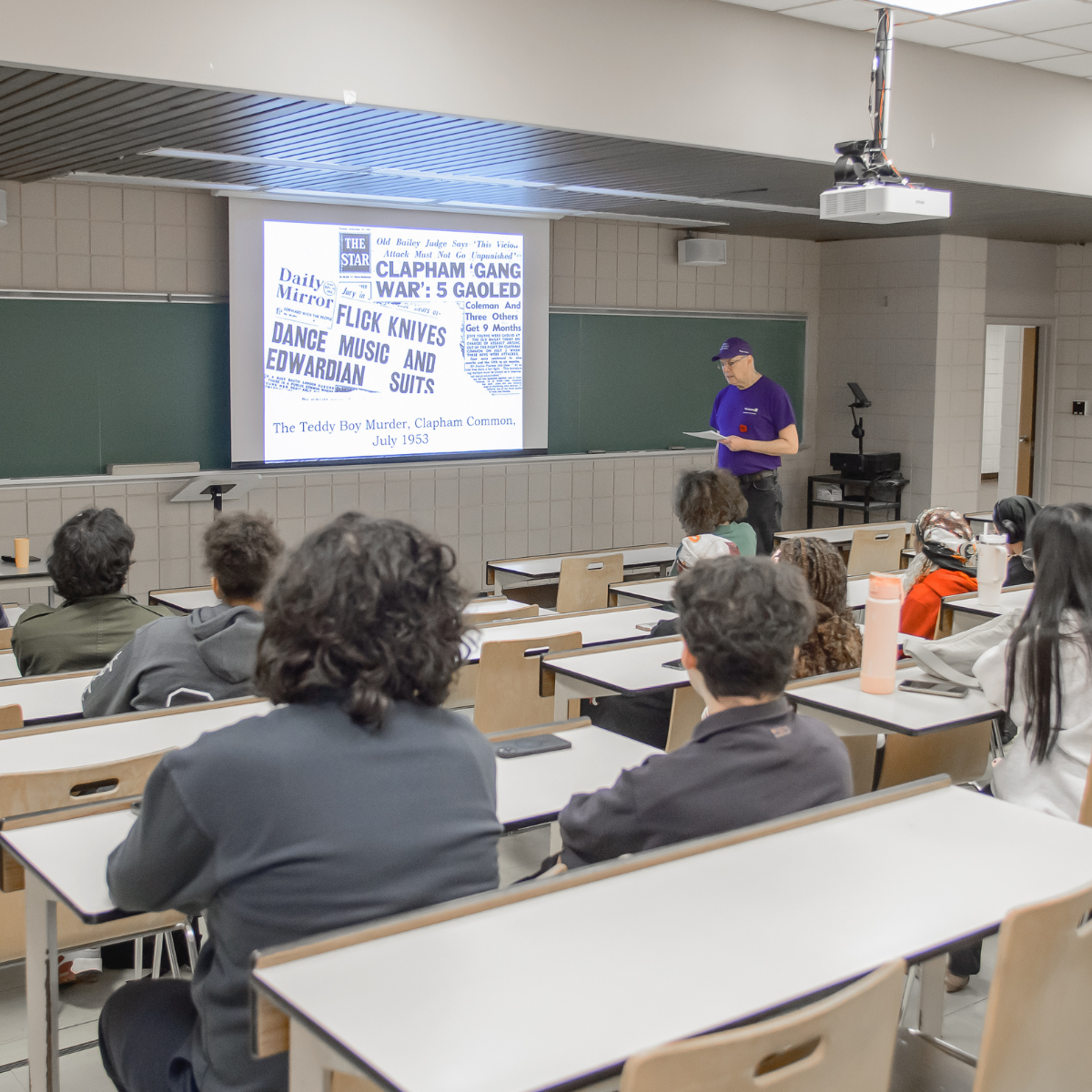
 In Homer’s Odyssey as History and Philosophy, Professor Eli Nathans led students through one of humanity’s most enduring texts, revealing how ancient stories continue to shape modern thought. Meanwhile, Professor Vance returned with Teds → Mods → Punks → Skins: Youth Rebellion and British Popular Music, exploring how music defined postwar British identity and became a reflection of youth culture and social change.
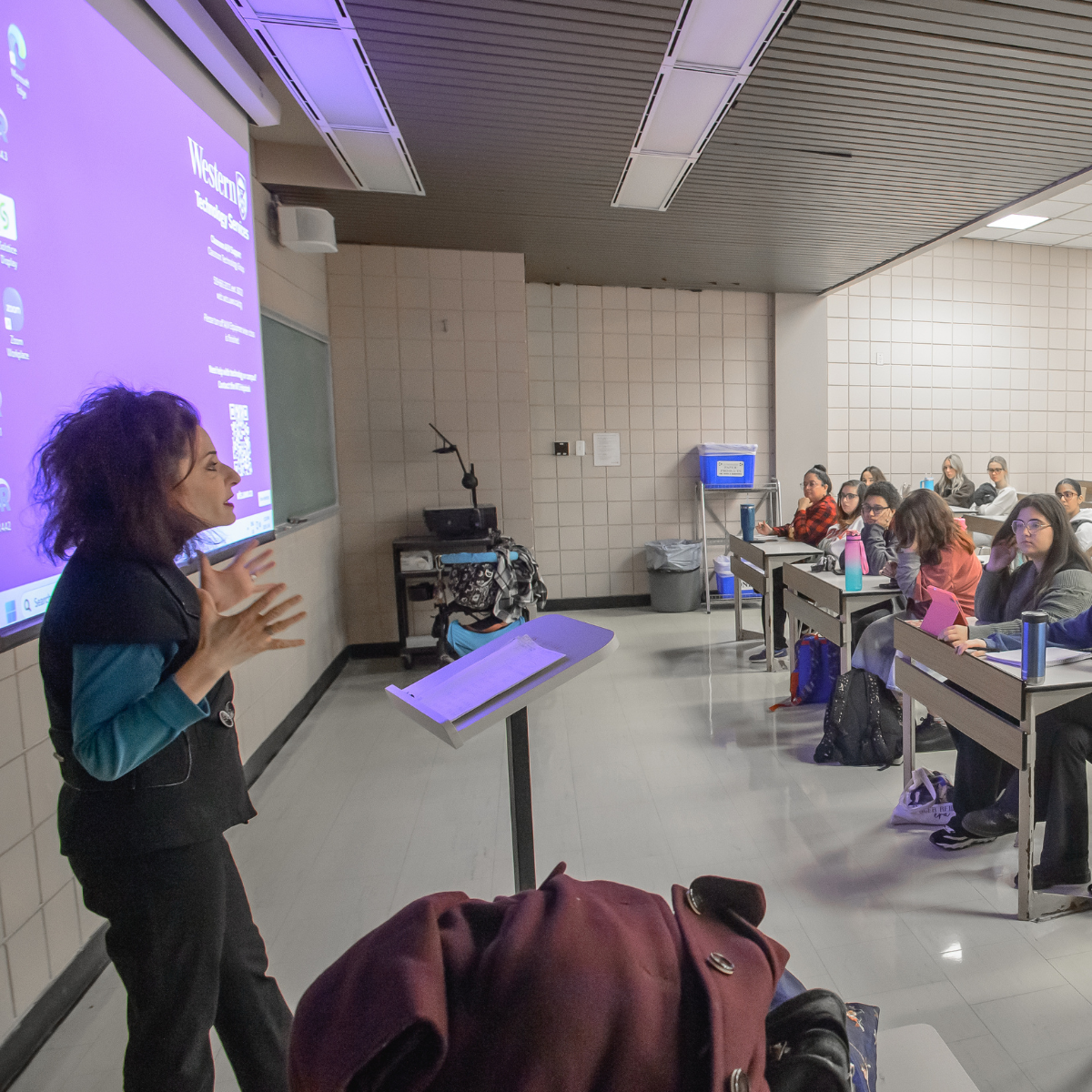 Other highlights included The Eras Tour: Exploring 19th- and 20th-Century Women’s History, where Professor Monda Halpern inspired students with stories of women who helped shape modern society, and Black Canadian Soldiers of the First World War, where Dr. Katelyn Stieva shared powerful accounts of resilience and determination among Black Canadians who faced discrimination yet served courageously in uniform.
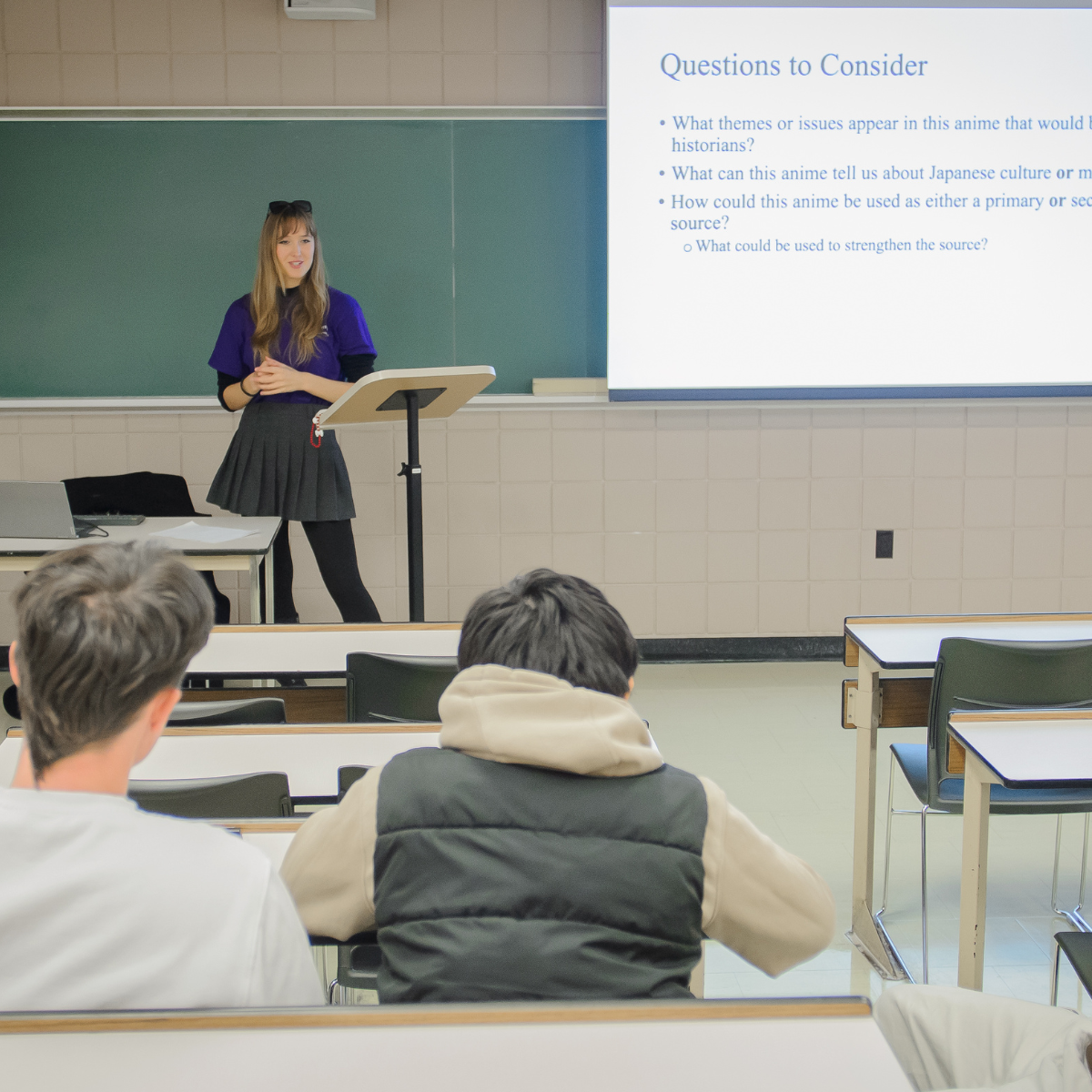
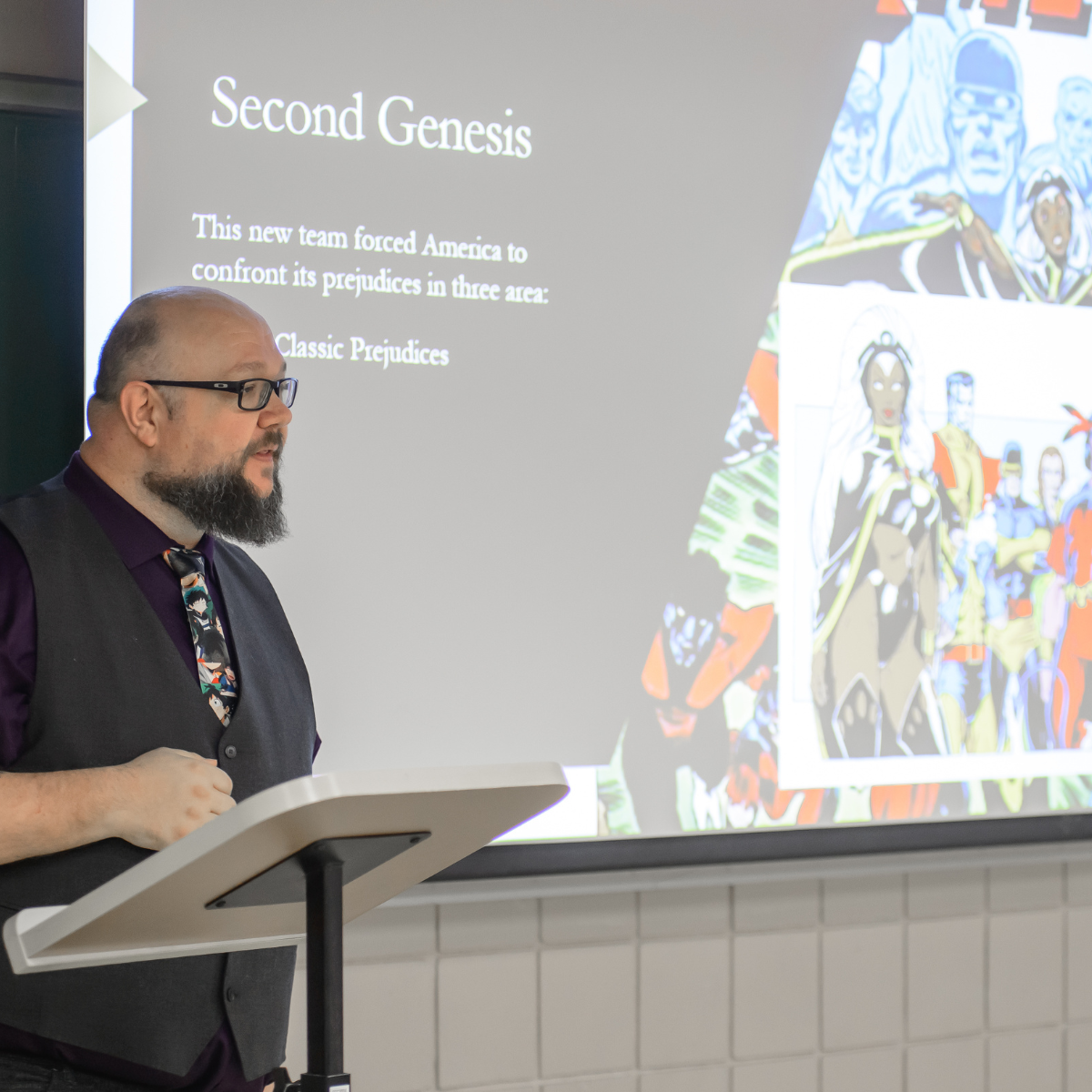 In addition to the lectures, a variety of small-group tutorials brought history to life in creative and hands-on ways. David Seston led Capes and Cowls: Graphic History in Action, a discussion on Canada’s Golden Age of comics and the superheroes who captivated readers nearly a century ago. Hannah Brett invited students to rethink long-held assumptions in Barbarians at the Gates: How Does History Deal with Baddies?, while Dani Janicki connected pop culture and scholarship in Animé and History, exploring how animation reflects historical realities.
 Students also had the opportunity to take a behind-the-scenes Archives and Special Collections Tour at the D.B. Weldon Library, where staff showcased rare manuscripts and artifacts. Other workshops included Busting Titanic Myths: Conspiracy Theories on the Sinking of the RMS Titanic by Huanyu Li, Statues and School Names: Celebration and Commemoration in Canadian History by Scott MacGregor, <Removed by Censor>: Reading Other People’s Wartime Letters by Kristen Jeanveau, and Military Artifacts: Exploring What Wars Leave Behind by Jonathan Vance. Each session offered a fresh way to engage with the past and demonstrated how history connects to questions of truth, memory, and meaning.
 Between sessions, students and teachers enjoyed a free lunch provided by Byron Pizza, along with snacks and drinks that kept conversations flowing. The Social Science Centre buzzed with energy as students discussed what they had learned, debated new ideas, and reflected on the connections between past and present.
As the last sessions ended at 1:05 p.m., one thing was clear: High School History Day 2025 was more than a schedule of lectures—it was a celebration of curiosity, critical thinking, and the shared belief that understanding the past is essential to shaping the future. Thanks to the dedication of the Department of History and the many volunteers who helped make the event possible, hundreds of students left Western with new perspectives, new questions, and a renewed excitement for exploring the stories that define who we are.
Because if there was one takeaway from the day, it was this: history is worth saving.